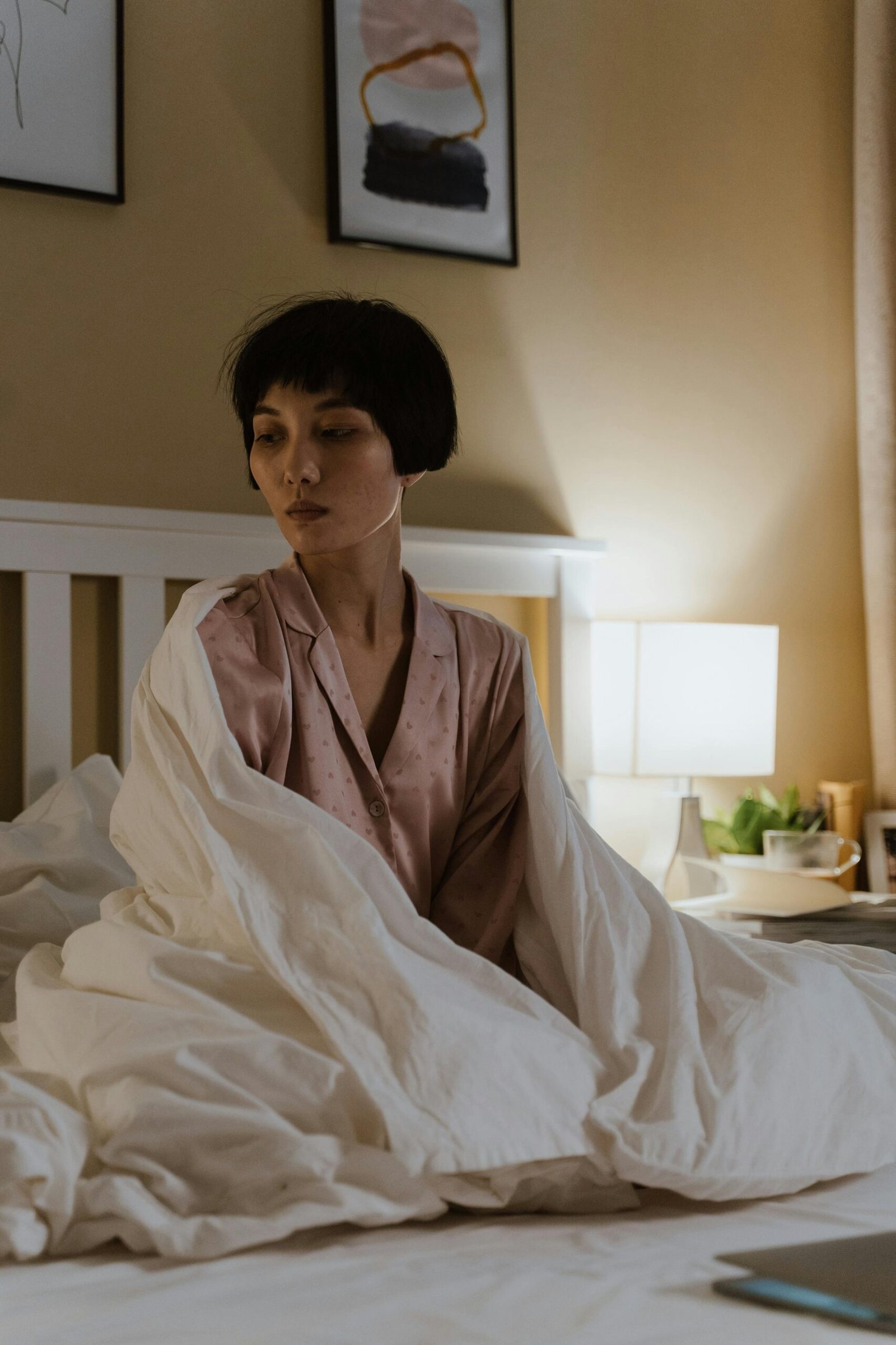
You fall asleep fine. That part is not the problem. But somewhere around three in the morning, you are wide awake, heart beating a little too fast, mind already running through tomorrow’s list. And then you lie there for an hour, sometimes two, watching the ceiling and dreading the alarm.
If this sounds familiar, you are not imagining things, and you are not just a light sleeper. What you are experiencing is one of the most common and least talked about symptoms of perimenopause.
Why 3 AM specifically
The timing is not random. Between roughly 2 and 4 AM, your body temperature naturally dips to its lowest point of the night as part of your normal sleep cycle. For most women, this dip is seamless. But during perimenopause, fluctuating estrogen levels disrupt your body’s ability to regulate temperature.
The result is often a hot flash or night sweat that happens just as you enter a lighter stage of sleep, enough to pull you fully awake. Even when a hot flash is not obvious, the hormonal shift itself can be enough to interrupt sleep at that hour.
Estrogen also plays a role in regulating cortisol, your body’s stress hormone. As estrogen drops and fluctuates, cortisol can spike earlier than it should in the morning cycle, sometimes right around 3 AM which signals your brain that it is time to wake up. This is why many women who wake in the night describe a feeling of alertness or mild anxiety, even when nothing is wrong.
Research from the North American Menopause Society confirms that sleep disturbances are among the most common symptoms reported during perimenopause, affecting roughly 40 to 60 percent of women in this transition. You are in very good company.
What helps: the things worth trying first
Cool your sleeping environment. The target for sleep is a room between 65 and 68 degrees Fahrenheit. If that sounds cold, keep in mind that your body temperature drops naturally during sleep and rises again toward morning. A cooler room supports that process. A fan, lighter bedding, or moisture-wicking sheets can make a meaningful difference, even if the underlying hormonal issue is still present.
Watch what you eat and drink in the evening. Alcohol is one of the biggest sleep disruptors for perimenopausal women, even in small amounts. It may help you fall asleep, but it fragments sleep in the second half of the night right when 3 AM waking is most likely to occur. Spicy food, caffeine after noon, and heavy meals close to bedtime all have similar effects.
Magnesium before bed. Magnesium glycinate or magnesium threonate, taken about an hour before sleep, helps calm the nervous system and supports deeper sleep cycles. Research published in journals including the Journal of Research in Medical Sciences has found that magnesium supplementation can improve sleep quality in adults with insomnia. It is one of the gentler, well-tolerated options worth trying before moving on to stronger interventions. Start with 200 to 400 mg and talk to your doctor about the right dose for you.
Establish a consistent wake time. This sounds counterintuitive when you are already exhausted, but your body’s internal clock anchors itself to when you get up, not when you go to bed. Waking at the same time every day even on weekends, even after a bad night helps stabilize your circadian rhythm over time. It is one of the most evidence-backed non-medication approaches to improving sleep.
When it is more than a bad habit
If you are waking consistently between 3 and 5 AM and finding it impossible to fall back asleep, it is worth talking to your doctor about two things specifically.
The first is whether hormone replacement therapy might be appropriate for you. HRT addresses the underlying estrogen fluctuation that is driving the temperature dysregulation. For many women, it significantly improves sleep quality alongside other perimenopausal symptoms. The conversation about whether HRT is right for you is worth having with a doctor who takes your symptoms seriously.
The second is to rule out sleep apnea. Many women are surprised to learn that sleep apnea becomes more common after 40, and the symptoms in women often look different than the classic snoring, gasping pattern seen in men. Waking in the early morning hours is one of them.
Managing the wake when it happens
Even with the best prevention, some nights you will still wake up. What you do in those moments matters.
Resist the urge to check your phone. Light from screens signals to your brain that it is daytime, and the content of email, news, social media activates thinking and anxiety. Keep the room dark.
Instead, try slow breathing: inhale for four counts, hold for four, exhale for six to eight. This activates your parasympathetic nervous system and counters the cortisol spike. It does not always work quickly, but it works more often than lying there waiting.
If you are not asleep within twenty to thirty minutes, get up and do something quiet in dim light, read a physical book, and sit with a cup of herbal tea. Then return to bed when you feel sleepy again. Lying awake in bed for long stretches trains your brain to associate the bed with wakefulness, which makes the pattern worse over time.
This is temporary, but you do not have to just wait it out
Perimenopause is a transition, not a permanent state. Sleep often improves as hormone levels stabilize, either naturally or with support. But the years in between are real, and the exhaustion is real, and you deserve more than being told this is just part of getting older.
Start with what you can control tonight the room temperature, the alcohol, and the consistent wake time. Then have the conversation with your doctor that you have been putting off.
Better sleep is possible. It may just need a different approach than you have tried before.